Take the First Step Toward Feeling Better
If anxiety is interfering with your daily life, seeking professional support can help you feel calmer, more grounded, and in control again.

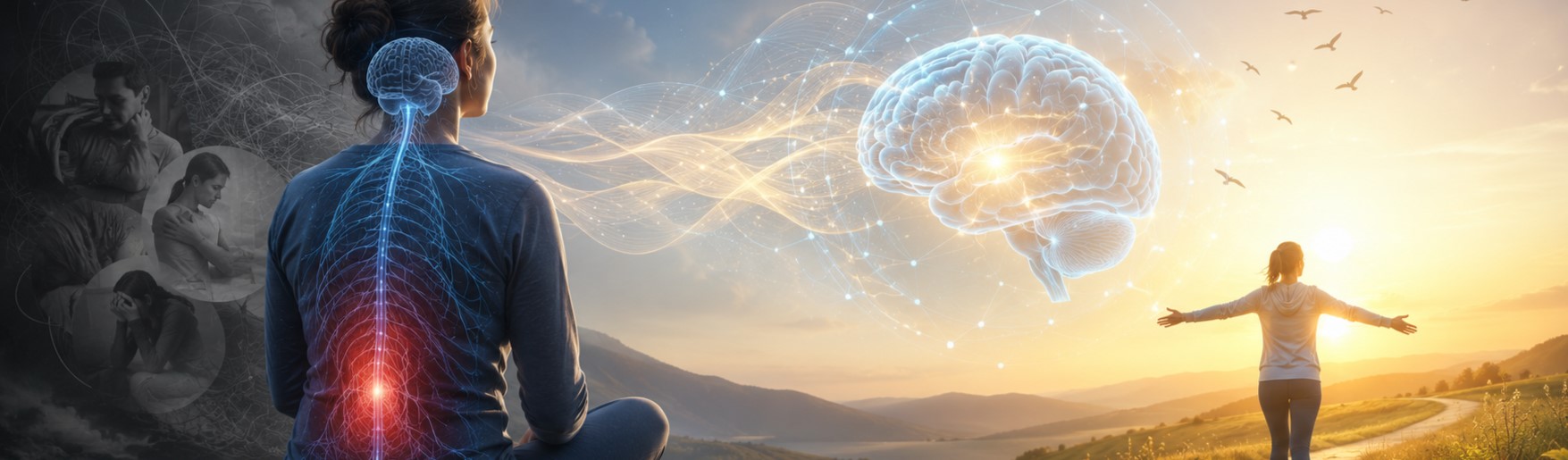
About 1.5 billion people worldwide suffer from chronic pain, but many do not have to. Recent neuroscience breakthroughs show that most chronic pain results from the brain misinterpreting safe messages from the body as if they were dangerous. Research has found that the brain has the power to generate pain even in the absence of physical damage or long after structural issues have been healed. This pain is also very, very real.
Pain Reprocessing Therapy (PRT) is a system of psychological techniques that retrains the brain to accurately interpret and respond to signals from the body, breaking the cycle of chronic pain. It focusses on treating “Neuroplastic pain” – pain generated by the brain despite the absence of structural injury. Although various treatments aim to manage pain, PRT stands apart as an evidence-based treatment to eliminate pain.
PRT operates on the premise that chronic pain is a learned response, and therefore, it can be unlearned. This is accomplished through:
Pain Neuroscience Education: Understanding that the brain generates pain as a protective mechanism, not always due to physical damage.
Somatic Tracking: A core technique involving observing pain sensations with a calm, curious, and non-threatening mindset.
Cognitive Reframing: Changing the emotional response to pain to reduce fear.
Mindfulness & Emotional Regulation: Developing the ability to de-escalate fear-based reactions to bodily sensations.

If anxiety is interfering with your daily life, seeking professional support can help you feel calmer, more grounded, and in control again.

Life isn’t about waiting for the storm to pass. It’s about learning how to dance in the rain.
– VIVIAN GREENE
If you change the way you look at things, the things you look at change.
– WAYNE DYER
Dare your genius to walk the wildest unknown ways.
– BYRCE COURTENAY
Support to help you feel calmer, more in control, and grounded again.
 Call
Call