Take the First Step Toward Feeling Better
If anxiety is interfering with your daily life, seeking professional support can help you feel calmer, more grounded, and in control again.



Deep Brain Reorienting (DBR) is a neuroscience-based physiologically grounded trauma therapy that targets the brainstem-level responses involved in attachment shock, traumatic rupture, and threat-based conditioning. Developed by Dr. Frank Corrigan, DBR works directly with the pre-affective orienting tension and shock response—what the brain and body register before emotion or thought arise.
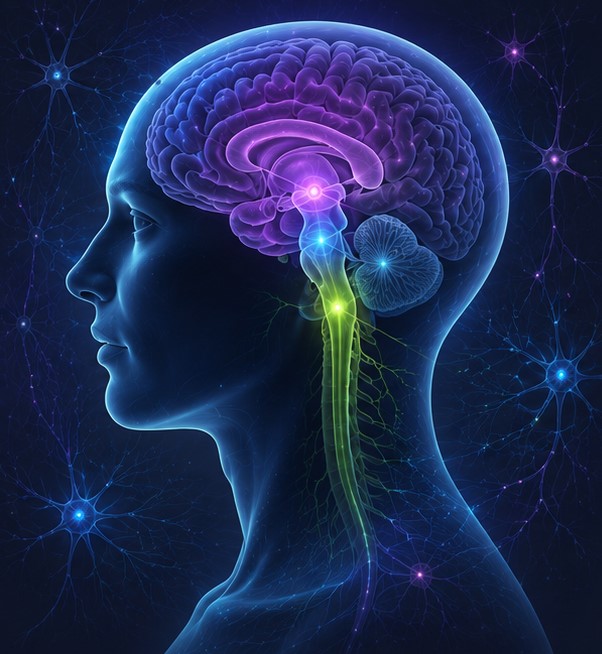
DBR targets the sequence of events that occurred in the brainstem at the time of the traumatic event. The sequence of events at the time of the initial shock during a traumatic event occurs through 3 areas of the brain in the brainstem and the midbrain: the superior colliculus, locus coeruleus, and periaqueductal grey.
When something shocking occurs, the brain’s superior colliculus moves your eyes towards or away from the shocking experience before the higher levels of your brain (like your cortex) can think through what is happening and before you have an emotional response to what is happening. Therefore, since DBR therapy targets this sequence of the initial shock through this part of the brain, DBR could be an important way to process the initial moments of shock of a traumatic experience and reduce the symptoms of Post-Traumatic Stress Disorder (PTSD) and help ease the symptoms of “brainstem shock” (including rumination, hypervigilance, dysregulation, somatic symptoms, disturbed sleep, phobias, and more
By helping clients process that pre-verbal moment of impact, DBR could unlock lasting relief from symptoms that resist even well-established approaches.
• Target: Focuses on the brainstem’s, or Midbrain’s, immediate reaction to traumatic events, particularly the “orienting” reflex, which occurs before cognitive or emotional processing.
• Process: Instead of reliving the emotion of a traumatic memory, clients are guided to focus on the initial, often subtle, muscle tension in the face and neck that accompanied the trauma.
• Mechanism: It works to “reorient” the nervous system away from the traumatic memory’s continued influence, aiming to prevent the intense emotional flooding often found in other trauma treatments.
• Target Audience: DBR is used to treat PTSD, attachment wounds, and traumatic memories, especially for individuals who feel “stuck” or overwhelmed by other therapies.
• Goal: To help patients feel safe and re-inhabit their bodies, promoting a sense of being “alive” and reducing physical tension. DBR has been found to be effective for individuals who struggle with trauma that is hard to verbalize.
If anxiety is interfering with your daily life, seeking professional support can help you feel calmer, more grounded, and in control again.

Life isn’t about waiting for the storm to pass. It’s about learning how to dance in the rain.
– VIVIAN GREENE
If you change the way you look at things, the things you look at change.
– WAYNE DYER
Dare your genius to walk the wildest unknown ways.
– BYRCE COURTENAY
Support to help you feel calmer, more in control, and grounded again.
 Call
Call